How to Create a Credit SKU
Depending on your organization’s pricing strategy, you can represent credits in two ways:
- SKU Type: Credit — applies a negative value to reduce the total price of a deal.
- SKU Type: Charge with Pricing Model: Tiered — shows customers how many credits they receive based on quantity tiers.
Use the method that best fits how you want credits to appear on the deal.
Option 1: Create a Credit SKU (Applies a Negative Value)
Use a Credit SKU when a customer upgrades their plan in the middle of a contract term, a Credit SKU will be applied to account for the value of the original product being replaced.
Pre-reqs
Before we begin you should decide if your product or service will be using a one-time, monthly or annual pricing schedule. This determines how often the credit is applied (for pricing purposes).
This is only for a SKU’s credits and not it’s billing. RevOps provides a Billing Frequency term to allow you to bill customers at a different interval than credits are purchased.
Step 1: Create a new SKU Type: Credit
To create a Credit SKU, you need to start by:
- Go to Settings > SKUs.
- Click Create SKU.
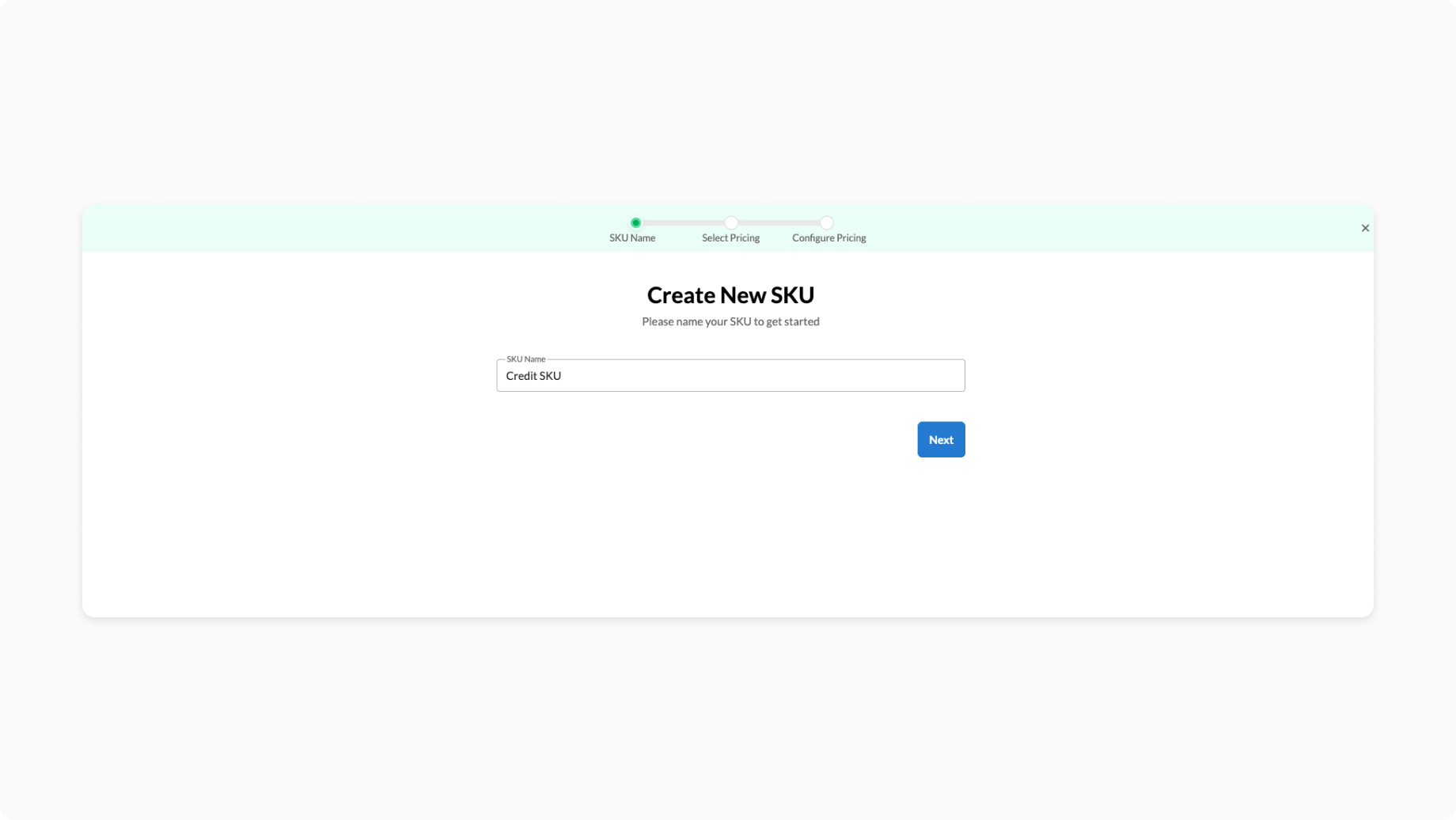
- In the SKU creation wizard first define a SKU name.
- Select SKU Type: Credit.
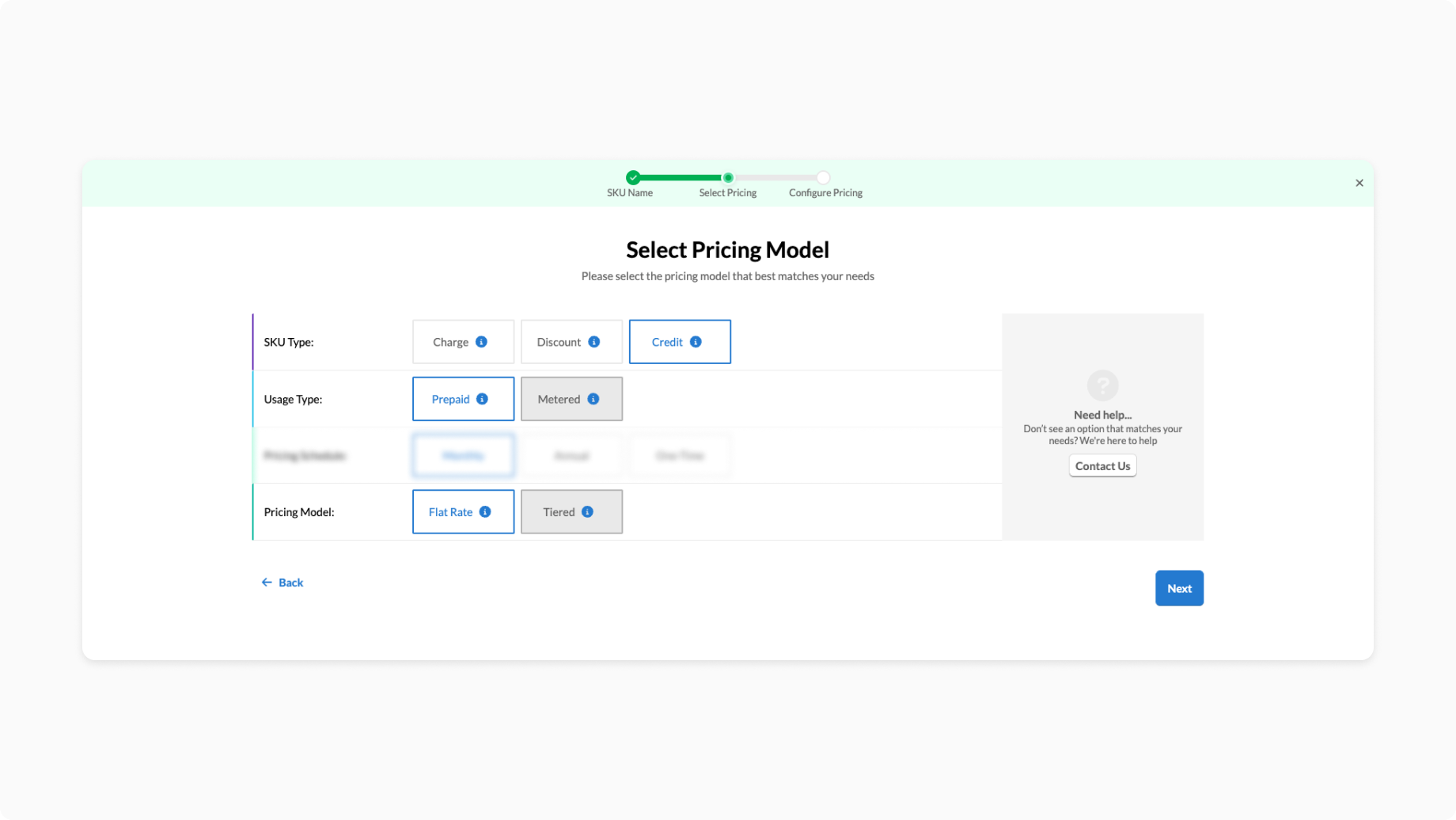
- For Pricing Schedule select:
- Annual - if you are charging an annual price
- Monthly - if you are charging a monthly price
- One time - if you are charging a one-time price
- In the next step, configure pricing by providing the Credit per unit amount.
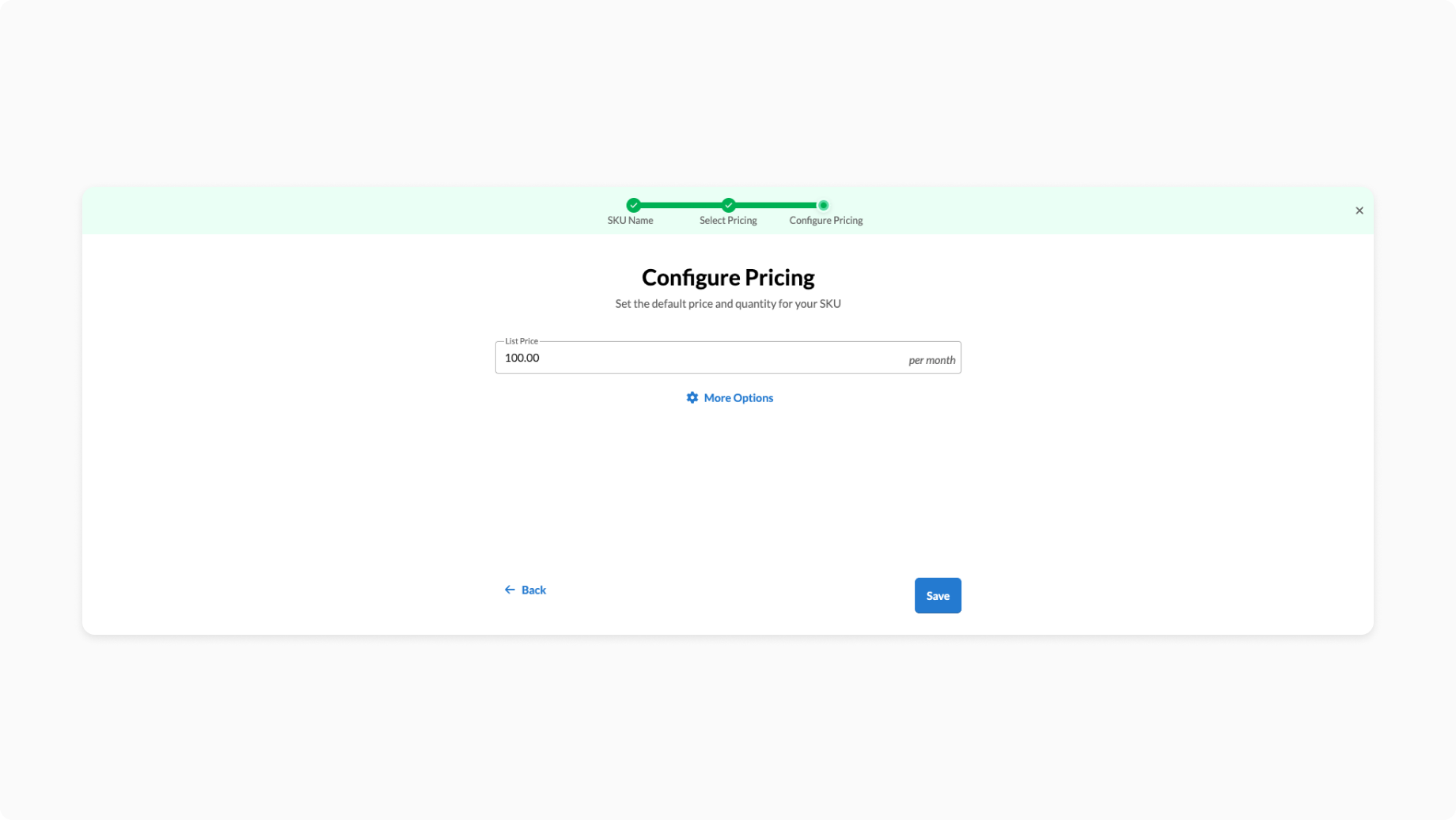
Click More options if you want to configure:
- List price and quantity
- Service period (available for Monthly and Annual schedules)
- Currency and unit name
- Allowed decimal places
Click Save to save and create your SKU.
Step 2: Fill out details
Once the SKU is created you will be redirected to SKU Detail/Edit page where you can review all provided information or continue editing fields not surfaced in SKU creation wizard.
Continue filling in all relevant information for your SKU. The SKU Name will be used only within RevOps while the Line Item Title will be what your customer sees. Include any specifying language in the Description field.
Step 3: Save the SKU
After you’re happy with how you’ve set up your SKU, scroll to the bottom of the page, and click the Save button in the bottom right corner.
If you have Salesforce or HubSpot connected to your Workspace, confirm that the respective Salesforce Integration or HubSpot Integration tabs have their IDs fields automatically filled in.
Use the Credit SKU on deals
To start quoting, head to RevOps, and click on the Create Deal button in the top right corner.
On the deal, click the Add SKUs button, then search for and click the SKU you just created to add it as a line item. To learn more about how to adjust the display of this table, take a look at this article.
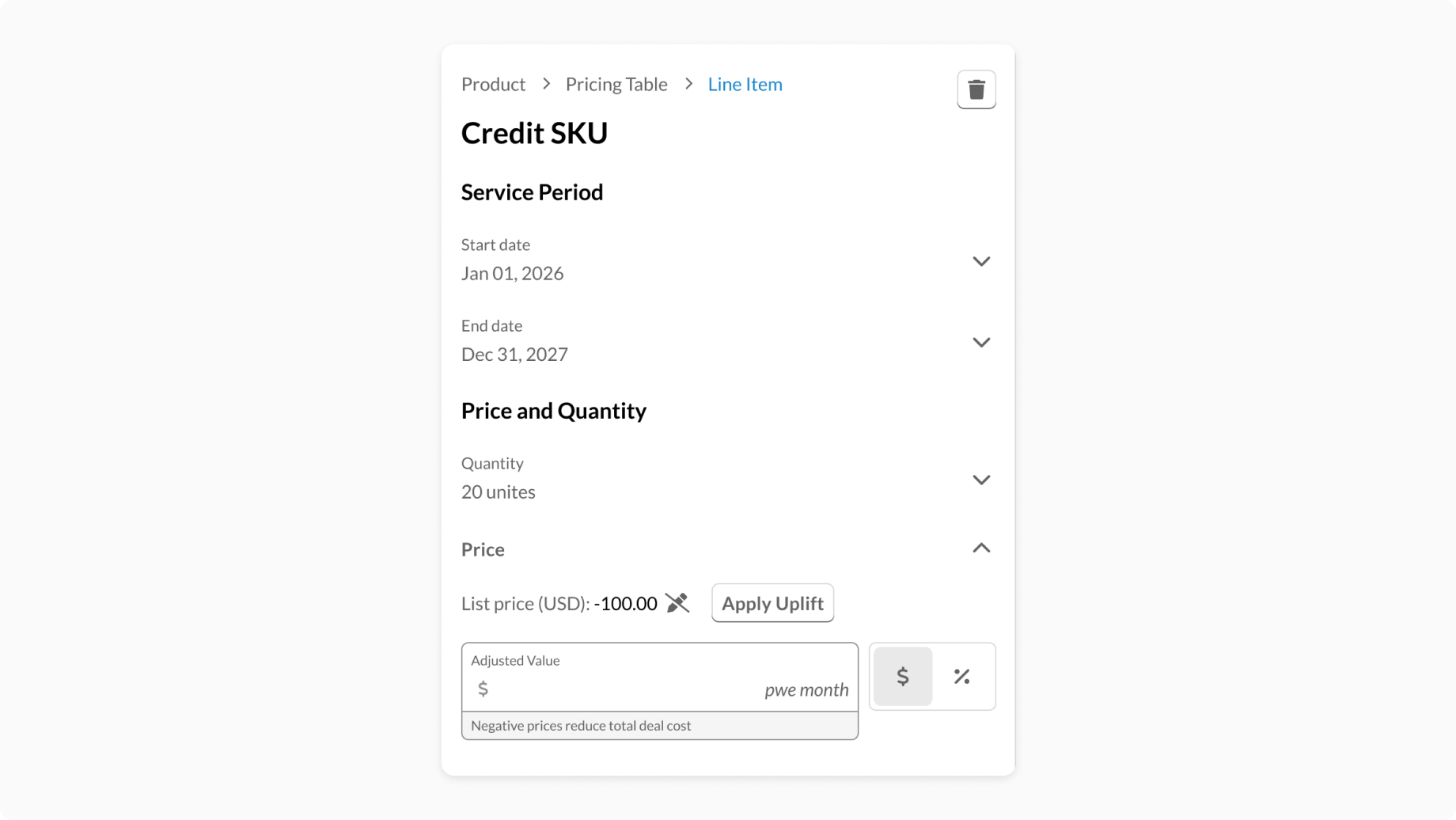
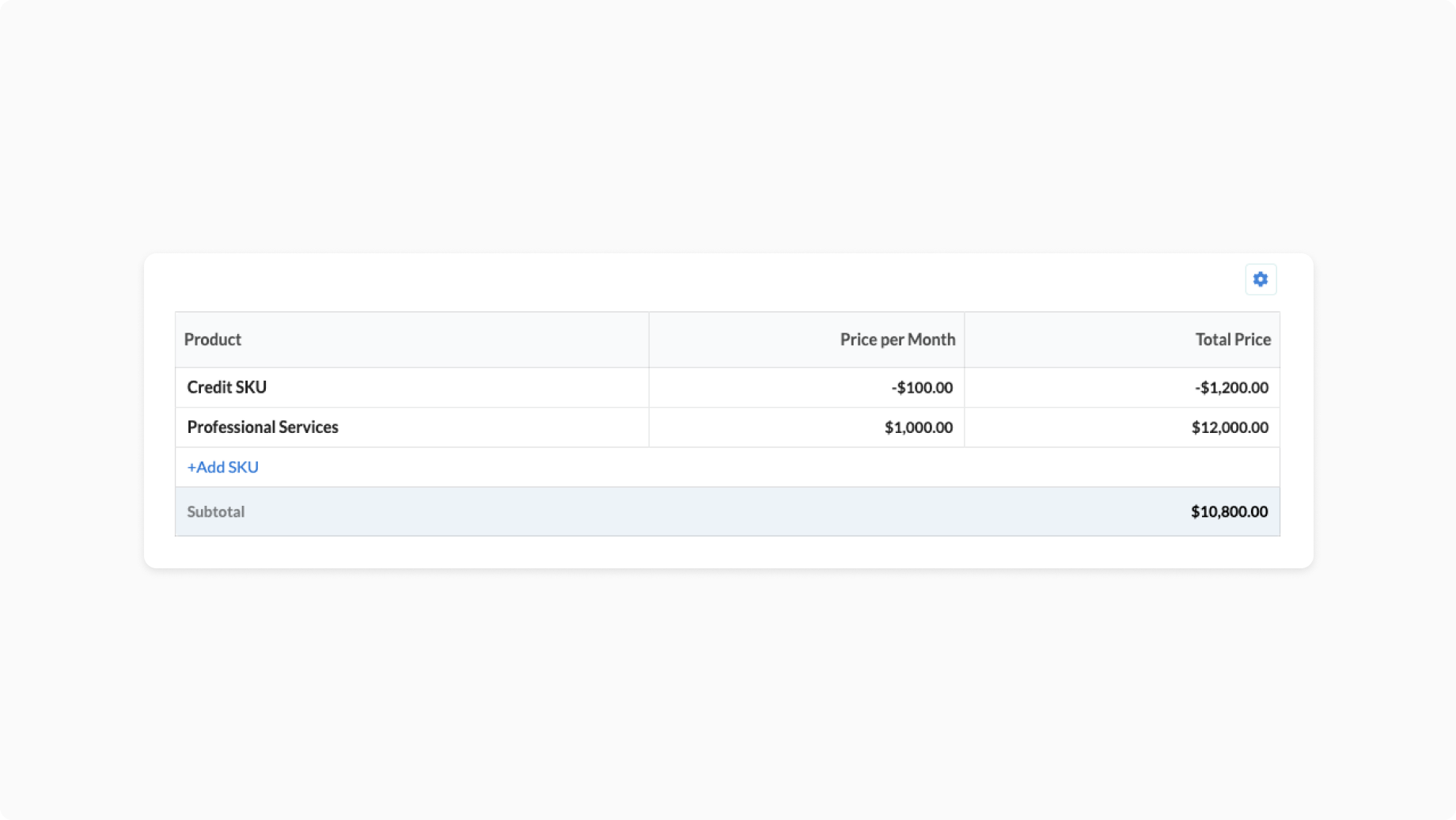
On the deal, the line item will appear as a negative value and reduce the total in the pricing table and TCV.
Option 2: Create a Tiered SKU (Prepay for usage)
Use a Tiered pricing model when you want to show customers how many credits they receive based on purchase volume. This model is common for prepaid, block, or usage-based pricing.
Pre-reqs
Before we begin you should decide if your product or service will be using a one-time, monthly or annual pricing schedule. Meaning, you will charge your users one time, once a month or once a year and using the period as the limit for rolling over leftover credits, etc.
This is only for a SKU’s pricing and not it’s billing. RevOps provides a Billing Frequency term to allow you to bill customers at a different interval than your pricing.
Step 1. Create a new Tiered SKU
To create a Tiered SKU, you need to start by:
- Go to Settings > SKUs.
- Click Create SKU.
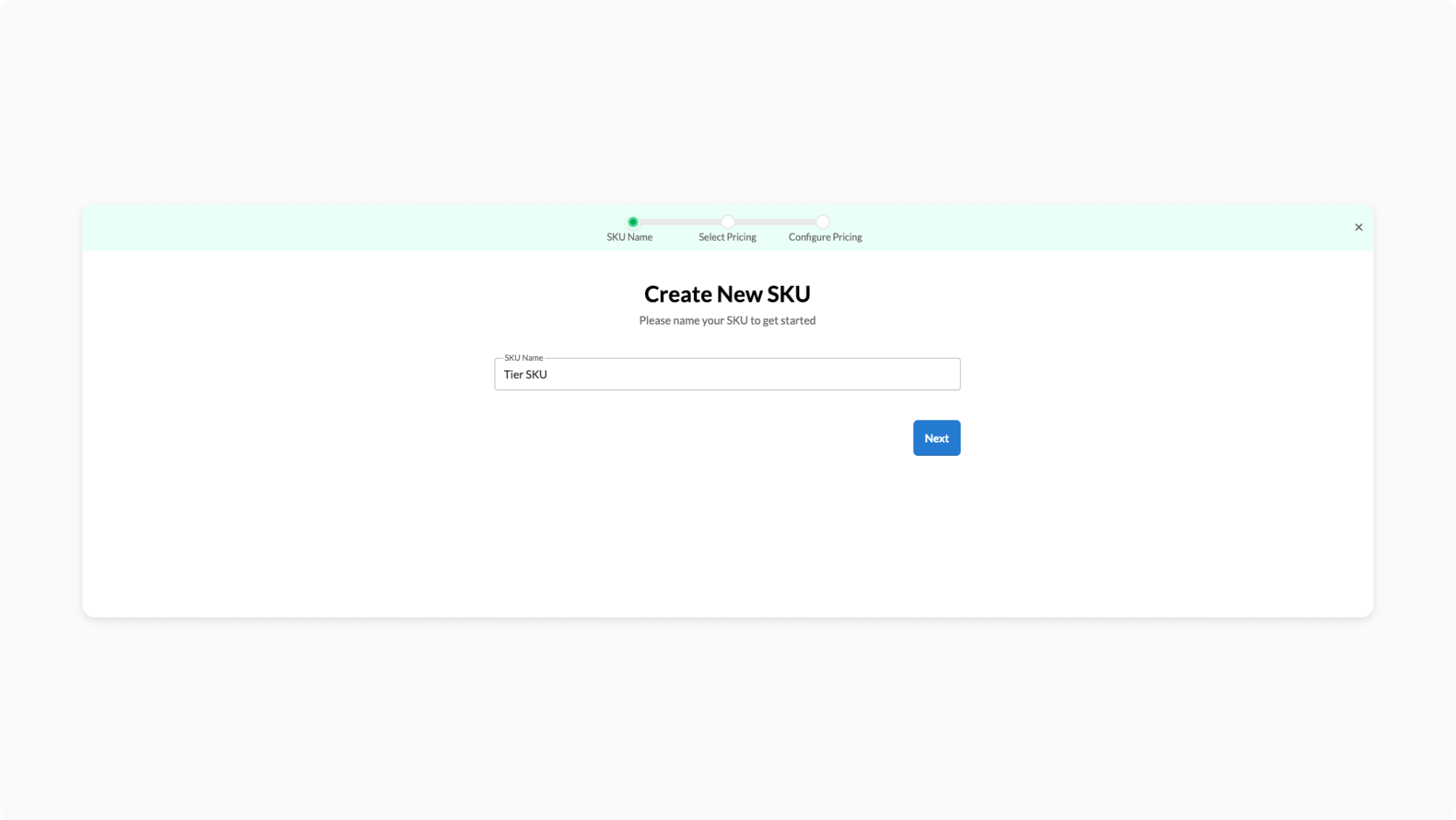
- In the SKU creation wizard first define a SKU name.
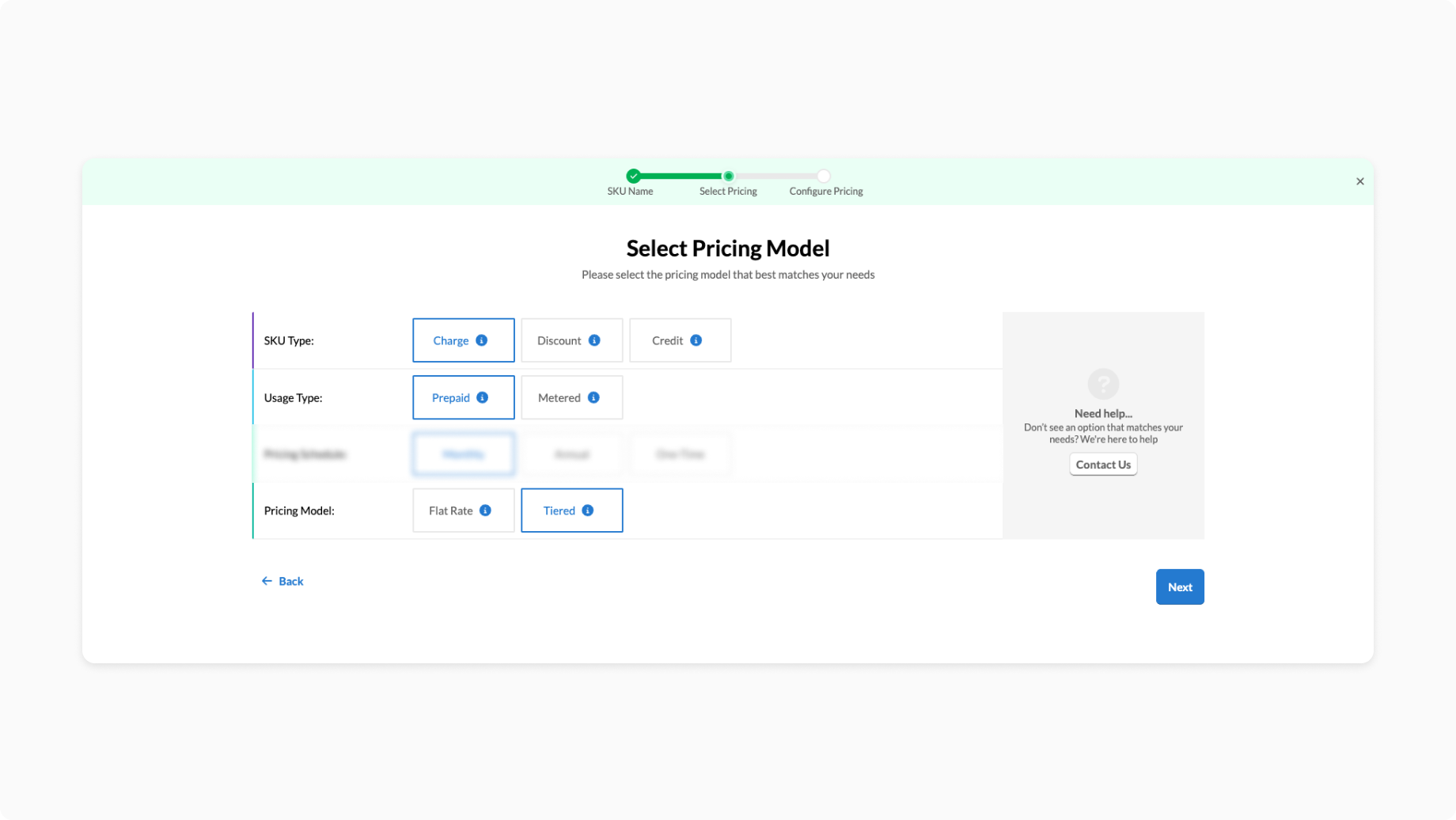
- In the next step select
- SKU Type: Charge
- Usage Type: Prepaid
- Pricing Model: Tiered
- For Pricing Schedule select:
- Annual - if you are charging an annual price
- Monthly - if you are charging a monthly price
- One time - if you are charging a one-time price
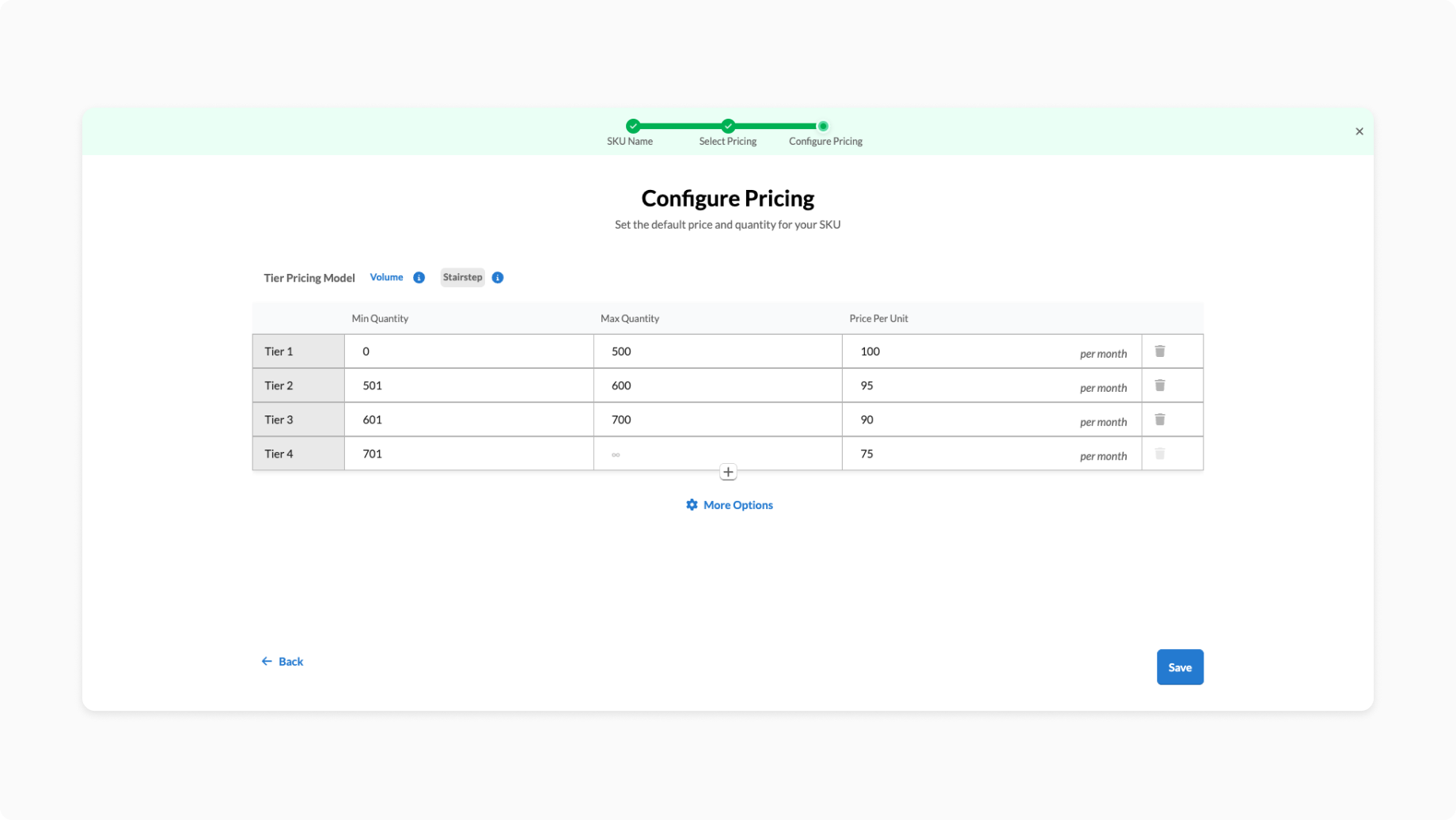
- In the next step, configure pricing by providing the Price per unit for all your Tiers associated with a SKU. If you only have 1 pricing tier, simply set the Price per unit value for that tier and click Save.
If you have multiple tiers, you can add more by copy-pasting your values directly from an Excel sheet or by following next guides:
- Click on the plus button
- Update the minimum and maximum quantity values
- Update the Price per unit value
- Repeat steps 1 - 3 for each of the tiers in your SKU’s pricing model.
Click the More Options button to reveal the following sections:
- List price & quantity
- Currency and Unit Name
- Number of allowed decimal places
Click Save to save and create your SKU.
Step 2. Fill out details
Once the SKU is created you will be redirected to SKU Detail/Edit page where you can review all provided information or continue editing fields not surfaced in SKU creation wizard.
Continue filling in all relevant information for your SKU. The SKU Name will be used only within RevOps while the Line Item Title will be what your customer sees. Include any specifying language in the Description field, like if unused credits will roll over to the pay period or how overage is handled for this particular SKU.
Step 3. Save the SKU
After you’re happy with how you’ve set up your SKU, scroll to the bottom of the page, and click the Save button in the bottom right corner.
If you have Salesforce or HubSpot connected to your Workspace, confirm that the respective Salesforce Integration or* HubSpot Integration tabs have their IDs fields automatically filled in.
Use the Tiered SKU on deals
To start quoting, head to RevOps, and click on the Create Deal button in the top right corner.
On the deal, click the Add SKUs button to create a new line item with your new Tiered SKU. Click the Done button to create a pricing table, with your SKU as a line item. To learn more about how to adjust the display of this table, take a look at this article. Now you can adjust the Quantity sold and apply a Discount, if appropriate. Try adjusting the Quantity to different tiers. As you raise or lower the Quantity you will see that the "active" tier and line item's price change. You can also click the Show pricing tiers and view how the tiers are configured.
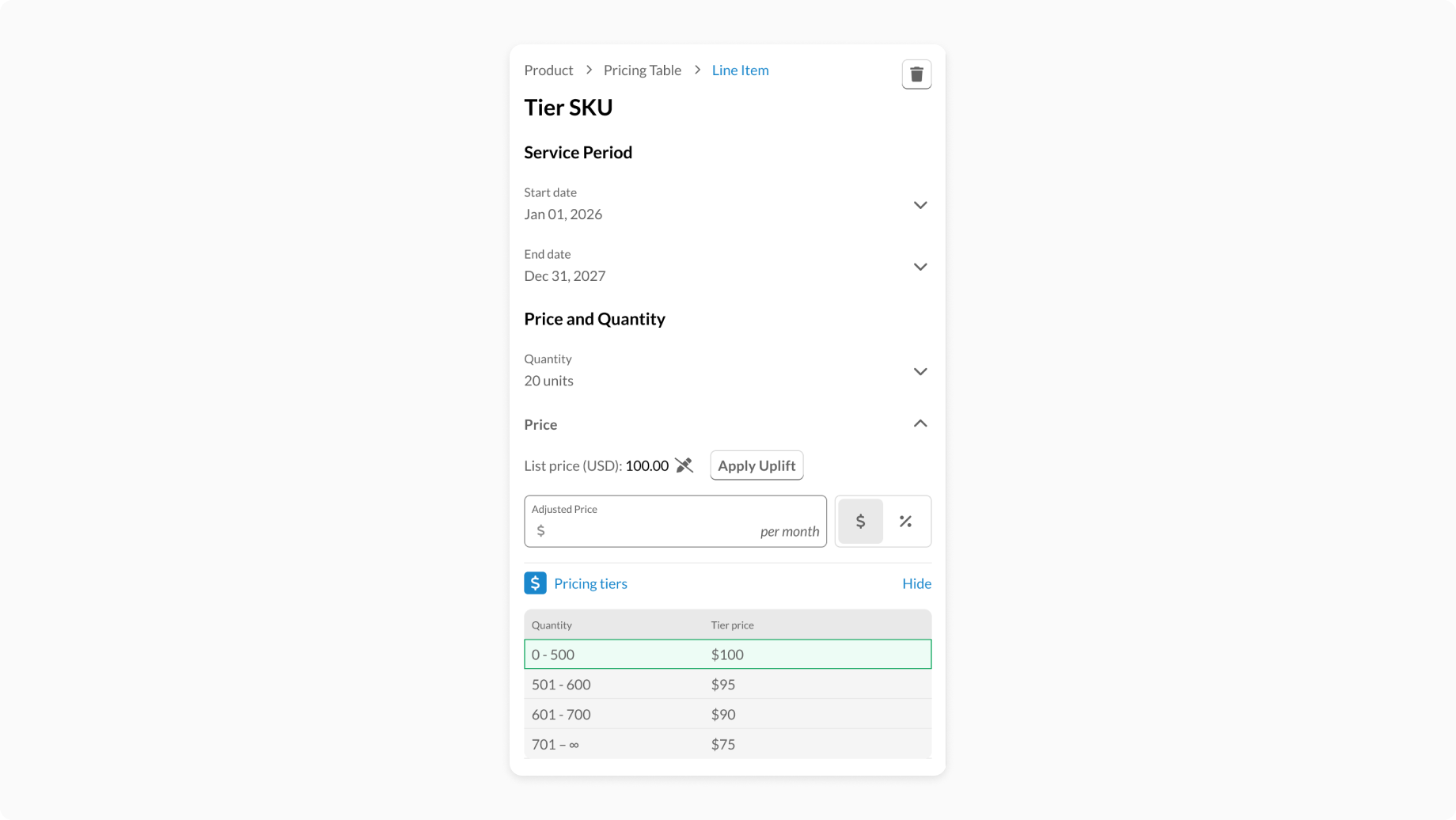
The Tier SKU line item has a Quantity of 20 units and is using it's $100 tier.